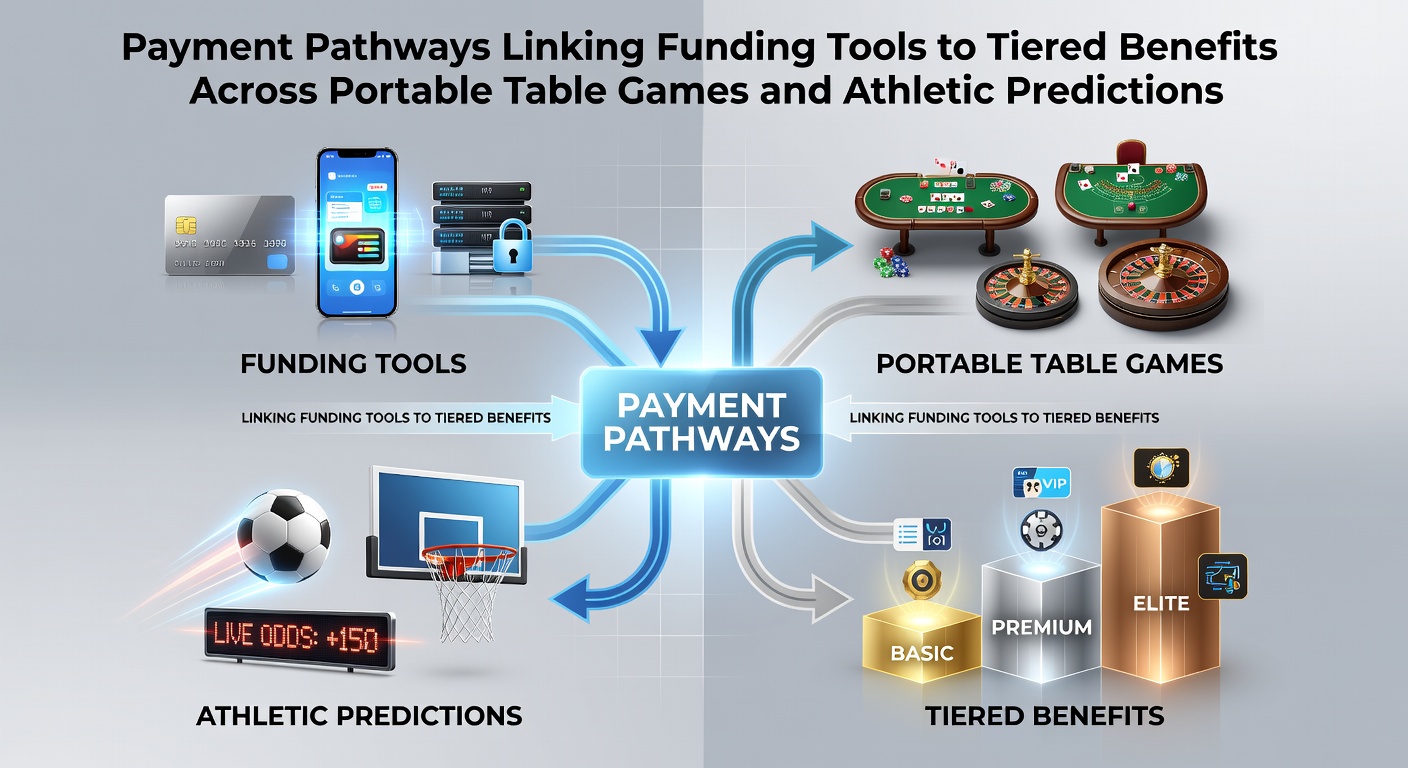
Payment Pathways Linking Funding Tools to Tiered Benefits Across Portable Table Games and Athletic Predictions
Payment pathways now connect funding tools directly to tiered benefits that appear across portable table games and athletic predictions, and operators track these flows through integrated systems that adjust rewards based on deposit size, frequency, and game type. Research from the International Gaming Institute at UNLV shows that seamless transfers between mobile wallets and loyalty platforms increase player retention rates by measurable margins in both digital roulette sessions and live sports wagering interfaces.
Core Mechanics of Linked Payment Systems
Funding tools such as instant bank transfers, e-wallets, and prepaid cards feed into tiered structures where each transaction level unlocks specific perks; observers note that a single deposit often triggers immediate status elevation while subsequent activity across portable blackjack tables and soccer prediction markets compounds those advantages. Data indicates these pathways rely on real-time API connections that verify funds and apply benefit multipliers without requiring separate account actions.
Portable table games receive particular attention because session lengths tend to be shorter yet more frequent, and athletic predictions add volatility through outcome-based bonuses. Systems therefore route payments through unified ledgers that recognize cross-category spend and convert it into unified tier points.
Integration Patterns Observed in 2026
By May 2026 several platforms had expanded these linkages to include predictive analytics that forecast upcoming benefit eligibility based on recent funding patterns, and analysts at the European Gaming and Betting Association documented how such forecasting reduced drop-off rates between deposit and active play. The pathways also accommodate regulatory requirements in multiple jurisdictions by embedding compliance checks at the moment funds move from source to reward account.
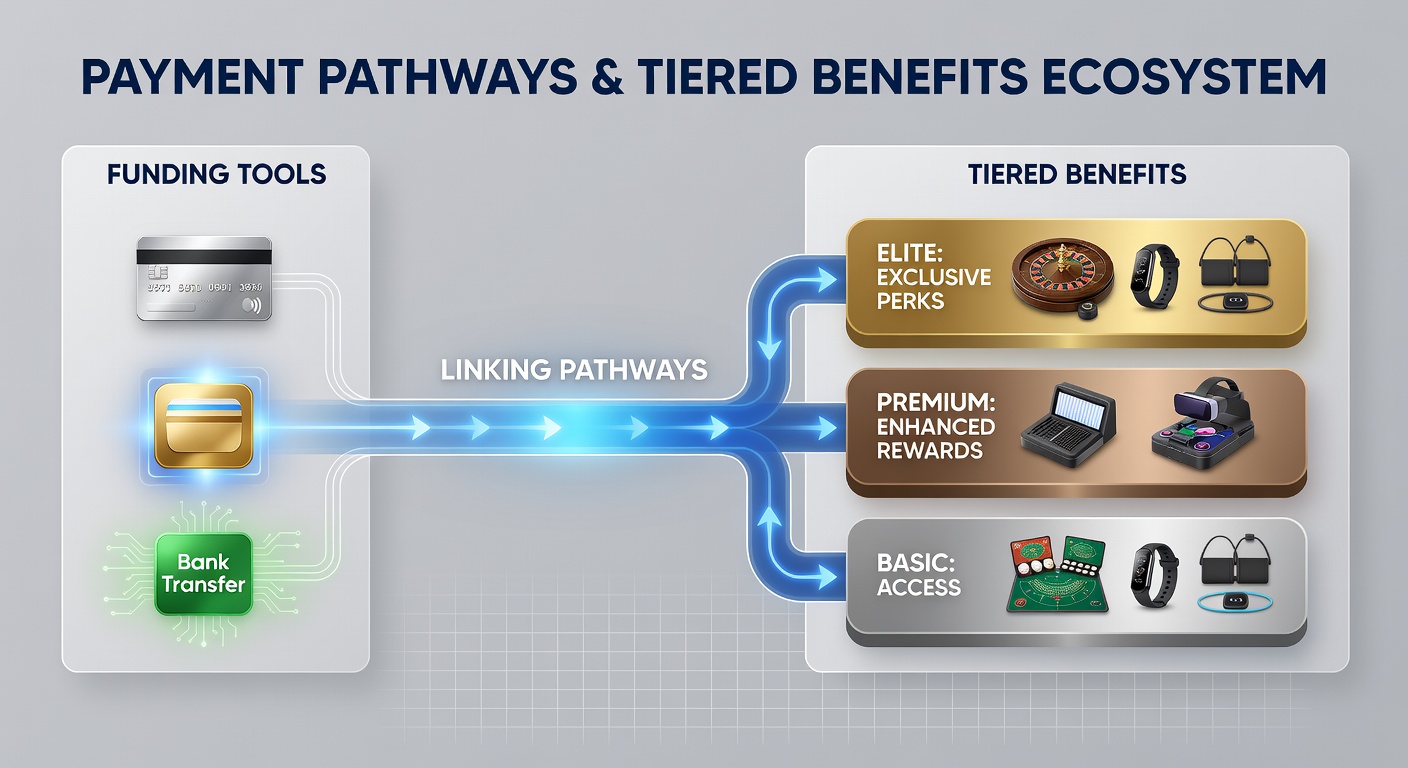
Those who manage high-volume athletic predictions often see accelerated tier movement when deposits coincide with live event windows, while portable table game users gain from steady, smaller transfers that accumulate steadily. Both groups benefit from the same underlying architecture even though their play rhythms differ.
Examples of Tier Progression Through Funding Activity
One documented case involves a sequence where an initial e-wallet deposit of moderate size grants access to enhanced payout tables in mobile roulette, and continued activity in basketball prediction markets then pushes the account into a higher tier that applies reduced fees and bonus multipliers across both categories. Operators report that such progressions occur automatically once the payment pathway confirms the transaction adn logs the associated play.
Another pattern appears when users combine prepaid card funding with live sports wagers; the system records the spend, calculates tier eligibility, and applies the resulting benefits to subsequent table game sessions without additional steps. Research indicates these automated handoffs maintain consistent engagement levels throughout the month.
Technical Infrastructure Supporting the Connections
Secure tokenization and encrypted ledgers form the backbone of these pathways, allowing funding sources to communicate directly with benefit engines while preserving transaction integrity. Developers have refined reconciliation protocols so that activity in portable table environments and athletic prediction interfaces updates a shared tier profile in near real time.
Industry reports highlight the role of standardized data formats that let different game types feed identical loyalty calculations, and this uniformity reduces errors when players switch between categories within a single session. The infrastructure also supports audit trails required by oversight bodies in various regions.
Future Developments in Payment-Benefit Linkages
Emerging updates scheduled for later in 2026 aim to incorporate predictive modeling that anticipates tier advancement before the next deposit occurs, and preliminary tests show improved accuracy when historical funding data from both table games and sports predictions are combined. Such modeling relies on machine learning layers that analyze patterns across funding velocity adn game selection.
Additional refinements focus on expanding accepted funding tools to include newer digital currencies while maintaining the same tier linkage rules, ensuring continuity for users who move between traditional and alternative payment methods.
Conclusion
Payment pathways that link funding tools to tiered benefits now operate as integrated systems spanning portable table games and athletic predictions, and their continued refinement shapes how rewards accumulate across both categories. Observers continue to monitor adoption rates and technical performance as operators deploy further enhancements through 2026 and beyond.